The International Sculpture Garden (ISG) at Penn’s Landing in Philadelphia was conceived by the Association for Public Art (aPA, formerly Fairmount Park Art Association) as part of the anticipated 1976 U.S. Bicentennial celebrations. The open-air installation was intended to celebrate and demonstrate the impact of other cultures on the American experience with a focus on ancient and ethnographic artworks. The sculpture garden featured significant objects from diverse cultures, acquired, and installed by aPA over several years.
In 1999 developments along the Penn’s Landing waterfront required the removal of all the sculptures (which were placed into storage), with the exception of the five Indonesian Water Spouts and Lintel, which still remain on site. After several unsuccessful attempts to redesign and reinstall the ISG, along with universal shifts in thinking about collecting items from other cultures, aPA reconsidered the notion of reestablishing an international sculpture garden altogether. The aPA decided instead to find appropriate homes for the ISG artworks, beginning with the indigenous works. The Na̱ʼwiti House Post (or Nahwitti) will be the first ISG artwork to be deaccessioned and transferred from aPA’s collection to its community of origin, scheduled for repatriation and delivery to the U’mista Cultural Centre in Alert Bay, British Columbia in 2026.
Sculptures that were included in the International Sculpture Garden:
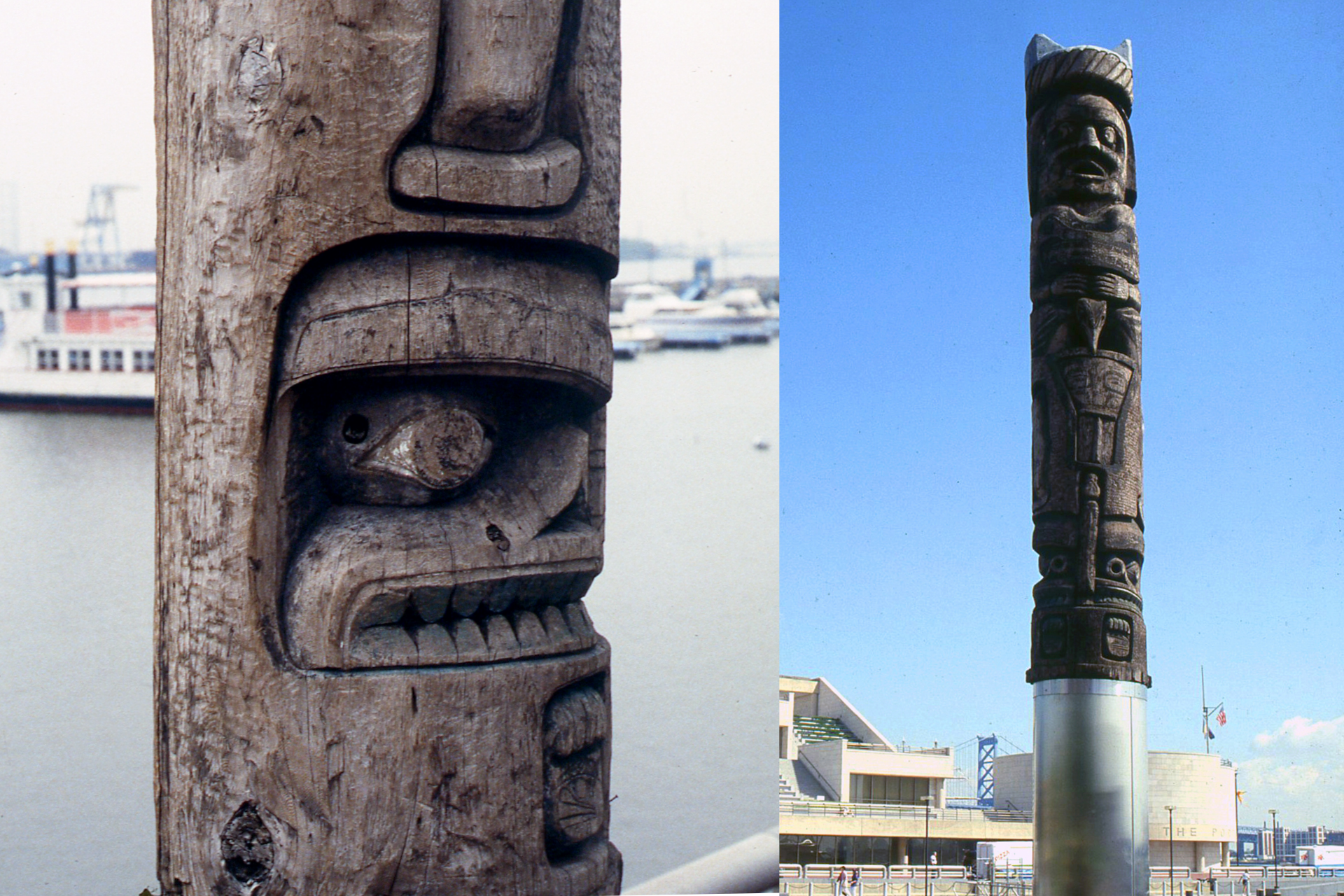
Na̱ʼwiti House Post (or Nahwitti) (c. 1850). Carved cedar poles are an art form unique to the First Nations people of the Pacific Northwest Coast of British Columbia. The Kwakwa̱ka̱ʼwakw carved several different kinds of cedar poles, such as this Na̱ʼwiti House Post (one of a pair), which was used inside a very large community house at the back end to help support the roof. This carved post shows the greatness of the chief owner and includes a plover (water bird), copper coin (symbol of wealth), and mythological grizzly bear from under the sea (guardian figure). It was carved by the Na̱ʼwiti on Hope Island, located in the Mount Waddington Regional District of Vancouver Island, British Columbia.
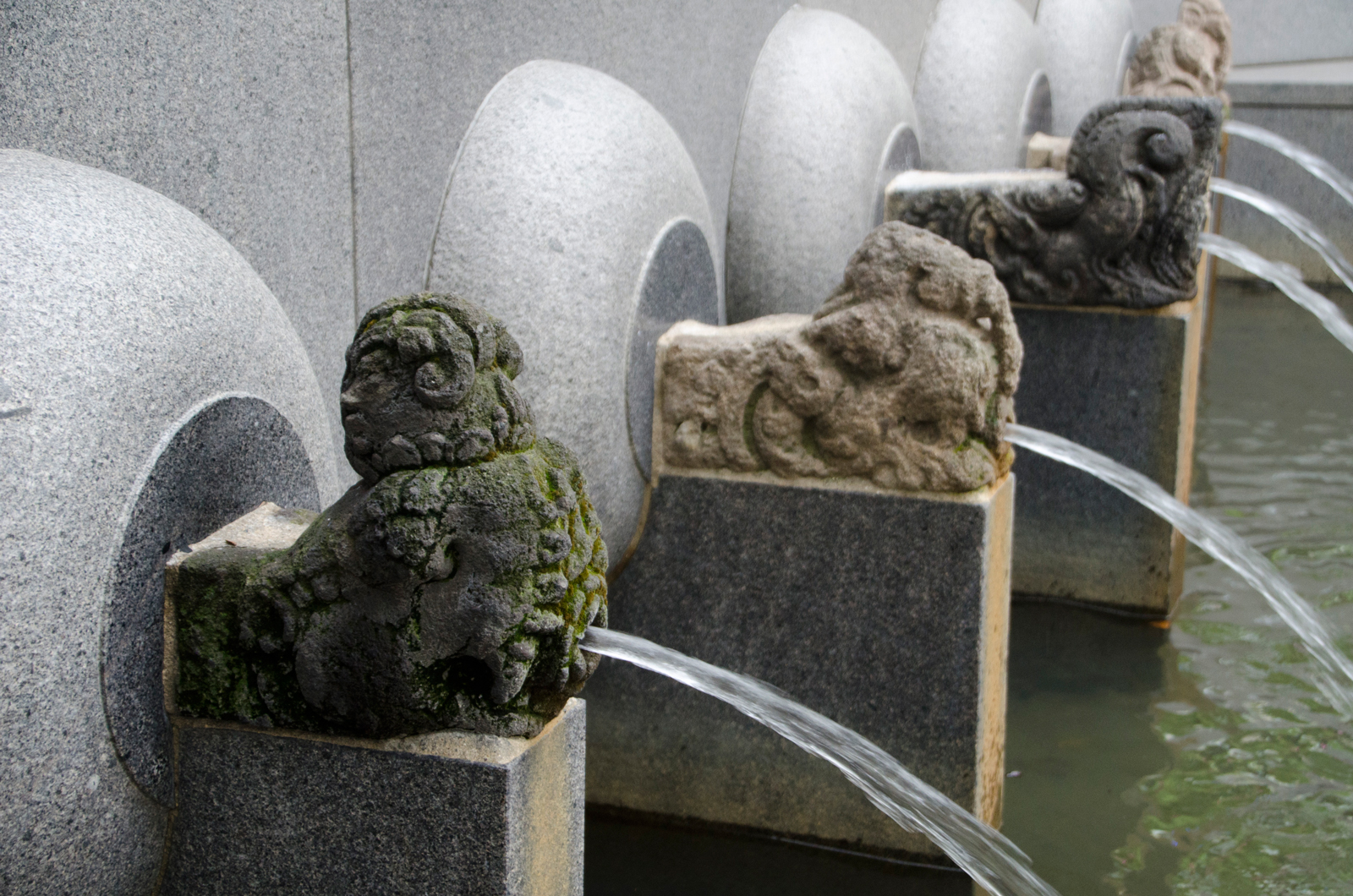
Indonesian Water Spouts and Lintel (12th-13th century–still installed on site). As long ago as the eighth century, temples expressing Hindu and Buddhist religious beliefs appeared on the Indonesian islands of Java and Sumatra. Many of the temple sites in eastern Java had pools for ritual bathing where the water flowed through carved stone spouts. In 1979 the aPA acquired five of these spouts, as well as a frog figure and a lintel, for installation in the Sculpture Garden. Three of the spouts resemble a tiger, a ram, and an elephant. Two are makaras —–mythical creatures that appear in Indian and Indonesian art. The overhead lintel depicts a kala, considered to be a ferocious and a protective force. Visitors who passed through a kala gateway are symbolically devoured and reborn.
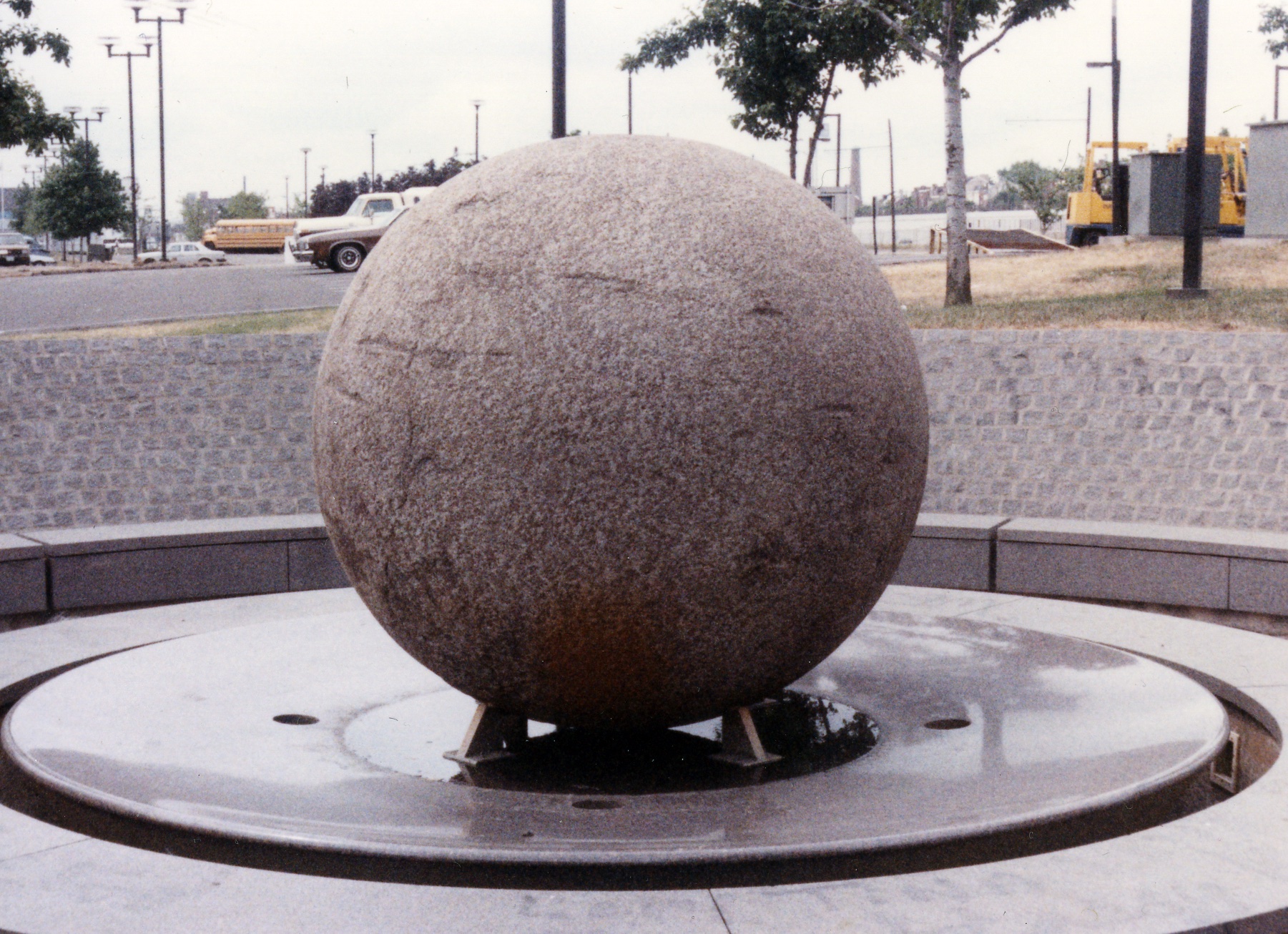
Costa Rican Spheres (300-1525). Pre-Columbian stone spheres have been discovered at sites in Central America, Puerto Rico, and Mexico. The largest come from the southern Pacific coast of Costa Rica, where some reach eight feet in diameter and exceed 16 tons in weight while deviating less than a quarter-inch from perfect roundness. To shape such a monolith with primitive tools was a prodigious feat; the stone, moreover, had to be transported by river from outcrops in the mountains. Small spheres were placed in graves; larger ones were set on platforms or arranged in patterns that suggest astronomical alignments. The two spheres formerly installed in the ISG are from a site near Palmar Sur vicinity, Diquís River Delta region in southern Costa Rica. The smaller one weighs 9,000 pounds, the larger one almost 24,000. The spheres were brought to Philadelphia with the cooperation of the Costa Rican government.
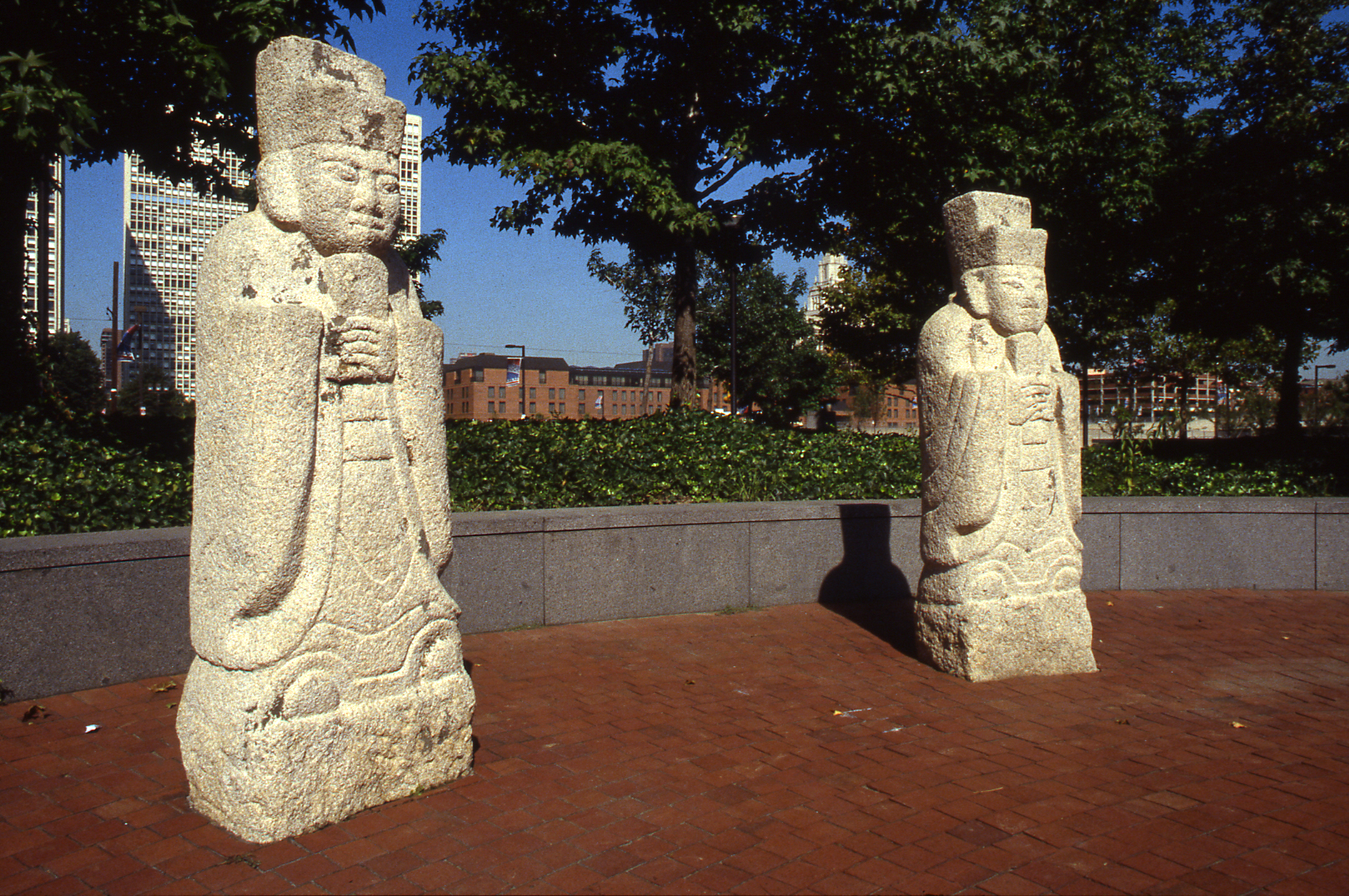
Korean Joseon dynasty Muninseok (1695). To flank the approaches to the tombs of eminent people, Koreans carved memorial stone guardian figures known as muninseok. The two formerly installed in the ISG, dressed in ceremonial robes and holding scrolls, represent civil officials. They were carved for the tomb of Oh Ryong Suh, a court official who advanced to the rank of vice-minister before his death in 1694. These figures, which together weigh almost 3 tons, were a gift to the aPA from the International Cultural Society of Korea and the Korean Association of Greater Philadelphia.
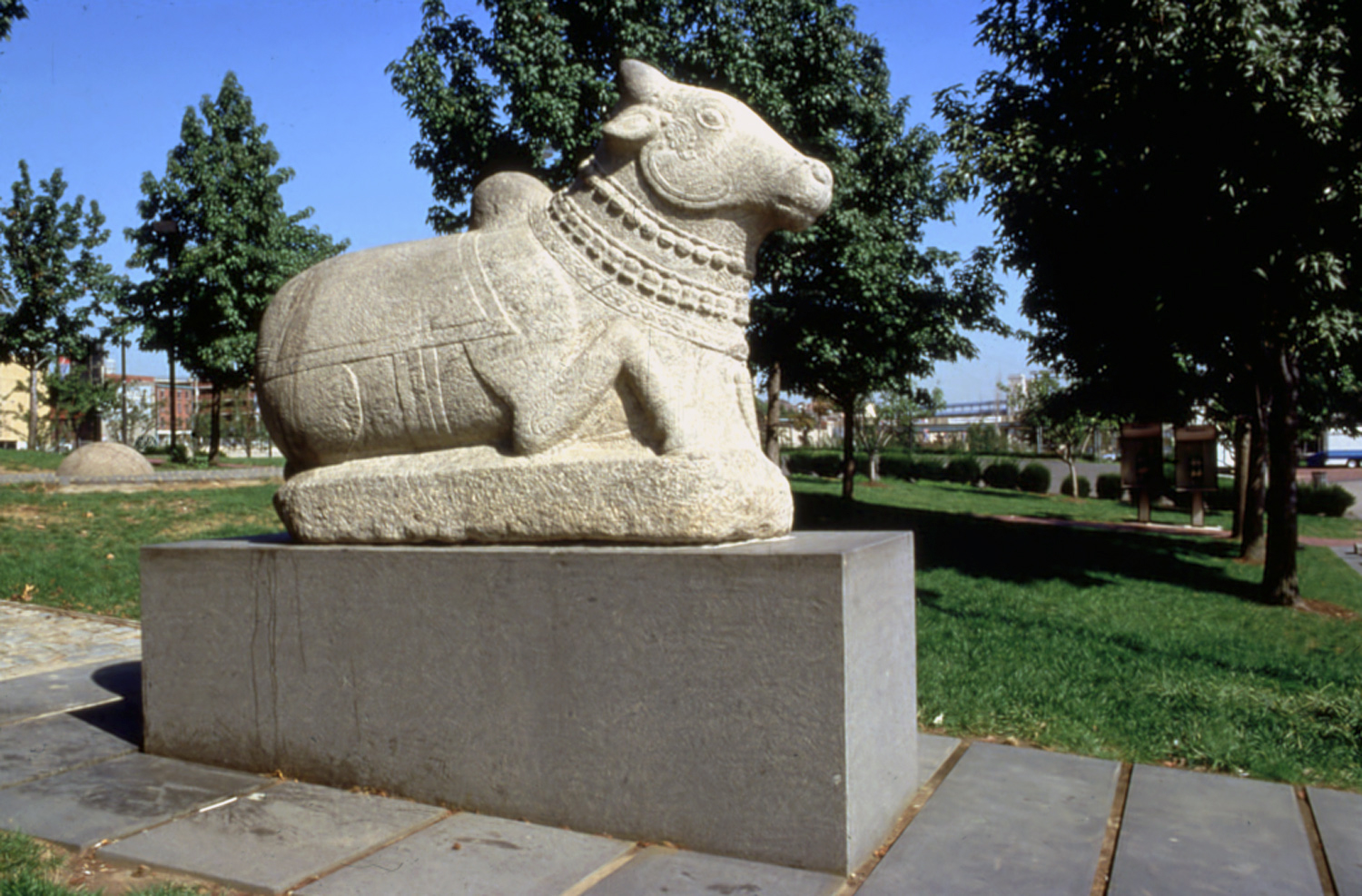
Southern Indian Nandi (1500). The name Nandi, which means “happiness,” designates the sacred bull belonging to Shiva, the Hindu god of creative power. In traditional Indian sculpture, Shiva is often shown mounted on or leaning against the animal. As a symbol of Shiva, the Nandi represents power, virility, joy, and delight, as well as a controlled potential for destructiveness. When carved as a free-standing figure, the Nandi is always shown in a resting position that emphasizes the calmer aspect of its power. Nandi images are found in abundance at Shiva temples. Royal patrons often vied with one another for the honor of creating the most massive Nandi figure. The largest examples in India are twice the size of the 6′- 7.5-ton Nandi formerly installed in the ISG, which is the largest ever to leave India. In 1969, the aPA purchased it with the cooperation of the Indian government and Prime Minister Indira Gandhi. The work was rededicated in 1997 in honor of the 50th anniversary of India’s independence.