ABOUT ART ON THE PARKWAY
Art on the Parkway is a juried open call organized by the Association for Public Art (aPA) in partnership with the Parkway Council and Philadelphia Parks & Recreation (PPR). It invites artists, designers, and other creatives to propose a temporary public art installation in Maja Park on Philadelphia’s Benjamin Franklin Parkway. This year’s project will be commissioned in recognition of the 250th anniversary of the Declaration of Independence and America’s Semiquincentennial celebrations that will take place in Philadelphia during the summer of 2026.
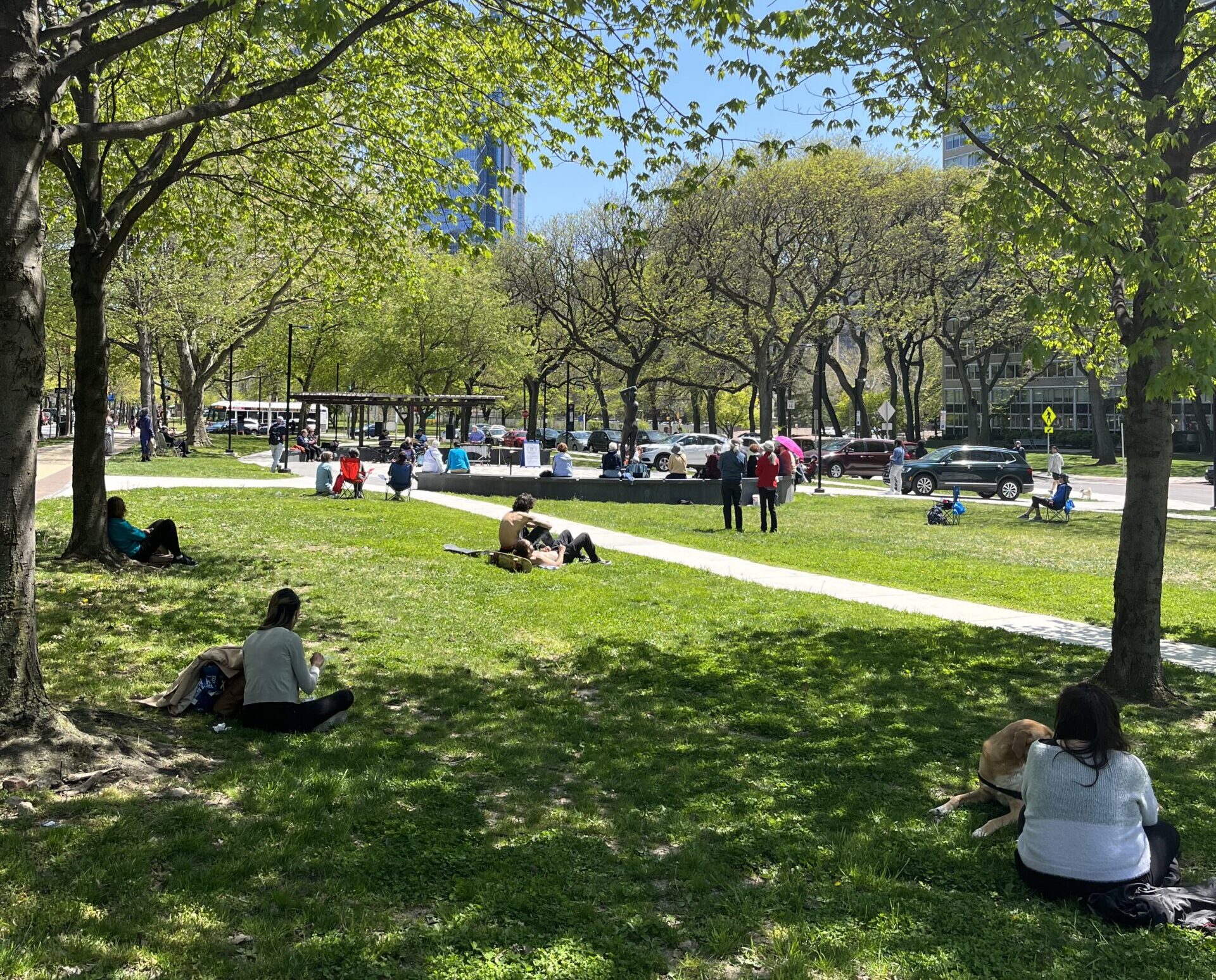
Maja Park. Photo courtesy Parkway Council.
The Benjamin Franklin Parkway is one of Philadelphia’s grandest civic spaces with a rich array of art and architecture—including many sculptures acquired and maintained by the Association for Public Art. We invite proposals for America’s Semiquincentennial that consider and expand on the idea of Art as Catalyst. More specifically, we are looking for public artworks that contribute to a place for people with different backgrounds and perspectives to engage, encounter new ideas, and increase mutual understanding. Creative works that inspire, motivate, or energize are encouraged as are artworks that embrace experimentation, challenge norms, or inspire action.
This commission will be a part of the Parkway Council’s Parkway to Park summer festivities on the Parkway and must be durable and suitable for display in a public park open to the elements for the four-month exhibit period from late June-October 2026. Art on the Parkway is open to individuals or collaborative teams who live or work in the Greater Philadelphia area. Students are not eligible. More information on eligibility and durability standards can be found in the Art on the Parkway FAQs.
AWARD
The selected proposal will receive an all-inclusive commission award of $20,000.
2026 JURORS
Juana Berrío, Marsha Perelman Senior Director of Programs, Calder Gardens
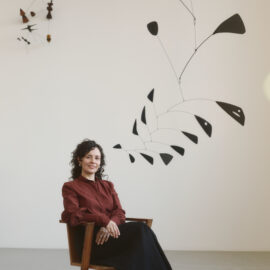 BIO: Juana Berrío is a Colombian New York-based curator, educator, and arts programmer. She currently serves as the Marsha Perelman Senior Director of Programs at Calder Gardens. She recently worked at Amant as the inaugural Associate Director of Residencies and Curator of Public Programs and has previously held positions at the Walker Art Center, the Joan Mitchell Foundation, SFMOMA, the New Museum, the 2013 Venice Biennale and UNTITLED, SF. In 2014, Juana co-founded and directed Kiria Koula, a gallery, bookstore, and programming space in San Francisco. As an independent curator and writer, she has organized exhibitions and programs in the United States and Colombia and has contributed essays to national and international publications.
Hallie Boyce, RLA, FASLA, and Partner at OLIN
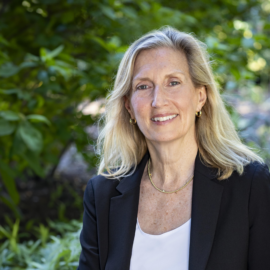
BIO: Hallie Boyce, FASLA, is a Partner at OLIN, a landscape architecture, urban design, and planning firm based in Philadelphia and Los Angeles. Inspired by the arts and ecology, her work focuses on civic landscapes for cultural institutions, university campuses, and underserved communities. She is dedicated to creating resilient environments that promote education, social health, and stewardship.
Hallie’s award-winning portfolio includes the Folger Shakespeare Library, the National Geographic Headquarters, the 11th Street Bridge Park in Washington, DC, and Currie Park in West Palm Beach, FL. Recent projects include the Brandywine Museum of Art Courtyard, the National Gallery of Art Comprehensive Plan, and the National Museum of American History. Her realized works also include the U.S. Embassy in London, the National Veterans Memorial and Museum, and Spirit of Women Park in Columbus, OH. For the 11th Street Bridge Park, she collaborated with community members and key stakeholders to commission several works of art that celebrate and preserve local culture.
A Trustee for the National Building Museum and a member of the Dean’s Advisory Board for the University of Virginia School of Architecture, Hallie holds an MLA from the University of Virginia and a BA in Art History from Bucknell University. She has taught and served as a guest critic at Temple University, the University of Virginia, Howard University, and the University of Pennsylvania, where she led a studio focused on sustainable landscapes that transformed the towns along the Czech-Austrian border.
Nicolo Gentile, Artist, Educator and 2025 Art on the Parkway Commissioned Artist
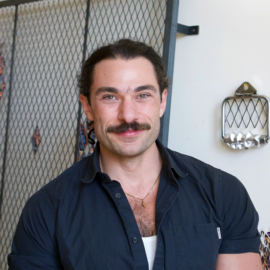 BIO: Nicolo Gentile is an artist and educator based in Philadelphia, PA. He holds an MFA in Sculpture from the Tyler School of Art and Architecture at Temple University and a BFA in General Fine Arts from the Pacific Northwest College of Art.
Gentile’s work has been exhibited nationally and internationally at venues including The Athenaeum, Commonweal Gallery, Temple Contemporary, and Automat (Philadelphia); Fragment Gallery and Trestle Gallery (New York); The Vault (Denver); LVL3 (Chicago); Portland Contemporary and Carnation Contemporary (Portland, OR); SOIL and The Vestibule (Seattle); TSA LA, Cannery Village Gallery, and Last Projects (Los Angeles); as well as exhibitions in Paris and Melbourne.
He is a recent recipient of the Association of Public Art’s 2025 Art on the Parkway Open Call and the Velocity Fund, supported by The Andy Warhol Foundation for the Visual Arts, and is currently an Artist in Residence at the Fitler Club in Philadelphia. Gentile teaches at the Tyler School of Art and Architecture and has served as a guest lecturer at the Pacific Northwest College of Art, Portland State University, and Nazareth College.
QUESTIONS
For more specific information, read the Art on the Parkway FAQs.
Organized by the Association for Public Art (aPA), in partnership with the Parkway Council and Philadelphia Parks & Recreation (PPR).
About Association for Public Art
The Association for Public Art (aPA) is a non-profit organization that commissions and preserves public art in Philadelphia, while advancing the pivotal role art can play in creating and enhancing public space and civic life. For more information, visit associationforpublicart.org.
About the Parkway Council
The Parkway Council, a not-for-profit organization, works to accelerate the transformation of Philadelphia’s Benjamin Franklin Parkway into a great urban park for all. For more information, visit parkwaycouncil.org
Art on the Parkway 2026 Finalists
Share Your Feedback
Get to know the finalist proposals for this year’s Art on the Parkway open call and complete this brief survey to share your thoughts. Your input will help shape the future of this program.
Proposal 1: For the Public Good
by Lewis Colburn
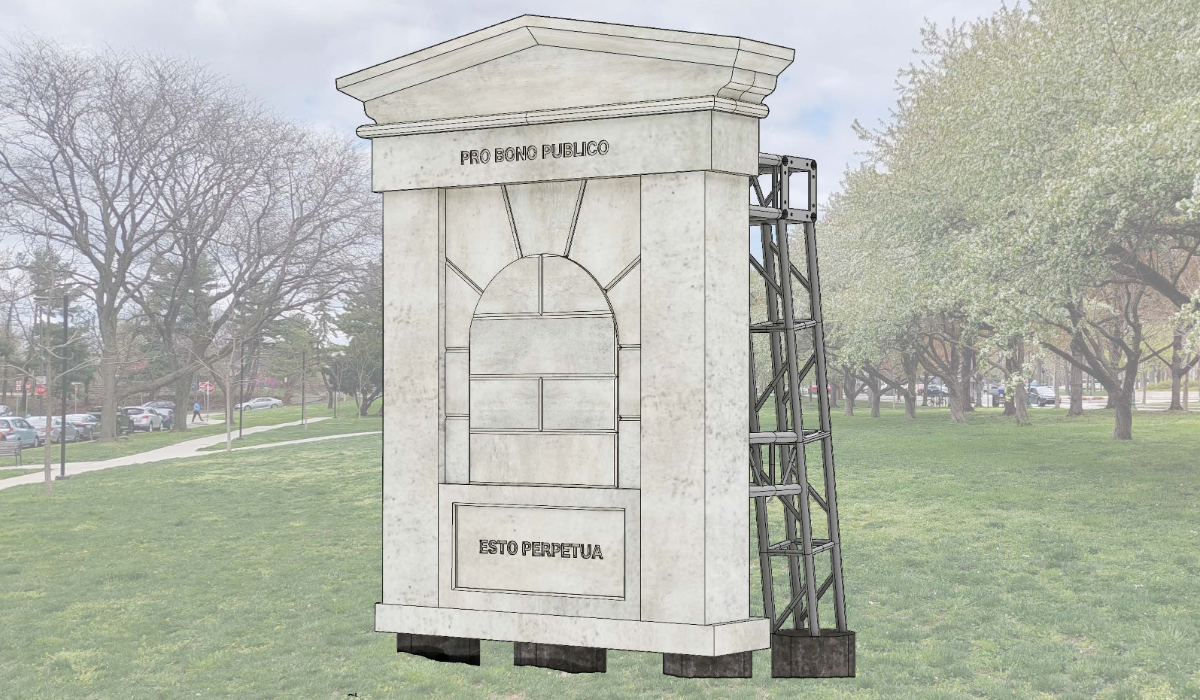
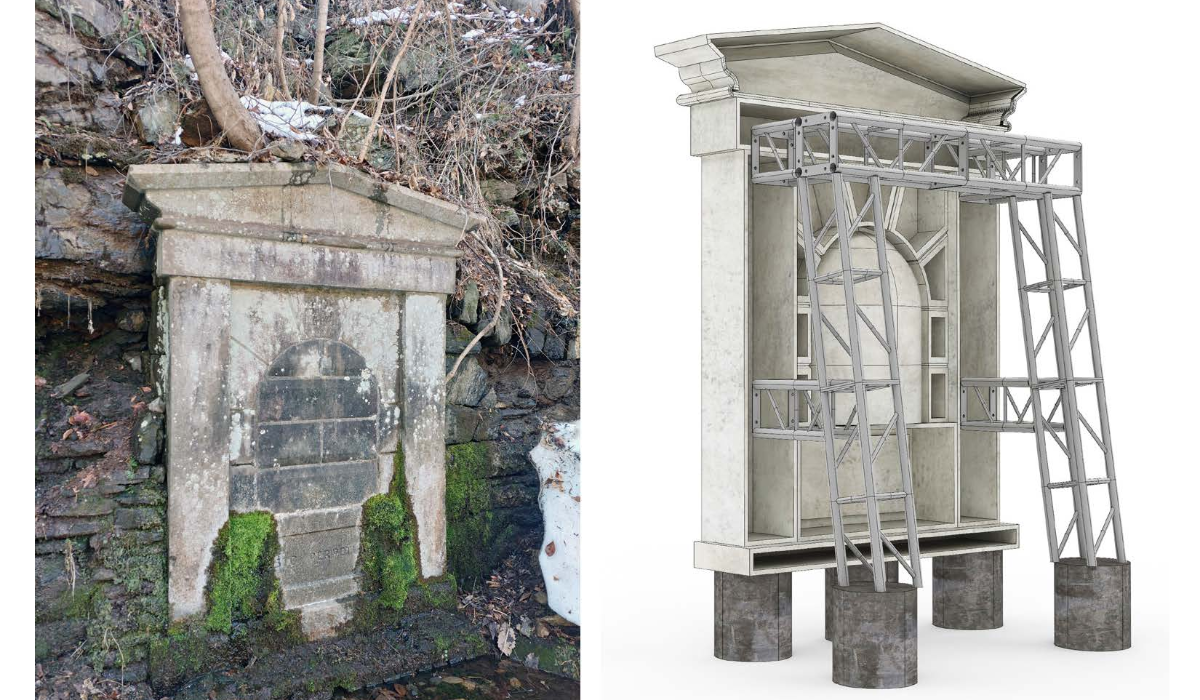
In 1854, one of the first public drinking fountains in the United States was installed along Forbidden Drive in the Wissahickon Valley. The fountain took water from a spring, serving travelers passing along the road. The lintel and plinth were inscribed with a pair of lofty Latin phrases “Pro Bono Publico” “Esto Perpetua” meaning ‘For the public good” and “Let it be perpetual.” Sadly, the fountain was sealed up in 1957, because the water had become too polluted to drink. It remains in the Wissahickon to this day, though deprived of its original function.
Lewis Colburn’s proposal draws from the story of this fountain, considering it as a cautionary tale in an era of declining trust and investment in public institutions, as well as drastic climate change and environmental degradation. In effect, the fountain’s story becomes both a quiet reminder, and a call to action towards a more whole, collectively-driven approach to our public institutions, as well as toward mitigating the unfolding environmental catastrophe we now live in.
The work is a full-scale replica of the fountain, approximately 9’ tall by 6’ wide, cast in segments in fiberglass-reinforced concrete. The artist plans to leave the back of the fountain open and exposed, in the manner of a theater set or a freestanding building façade. The structure will be supported by a series of aluminum stage trusses, both providing structural support, and emphasizing the constructed, artificial nature of the object.
Proposal 2: Resonant Ground
by Kayla Fell, Jeff Lorenz, Sarah Leaskey, and Netanel Portier (Refugia Design)
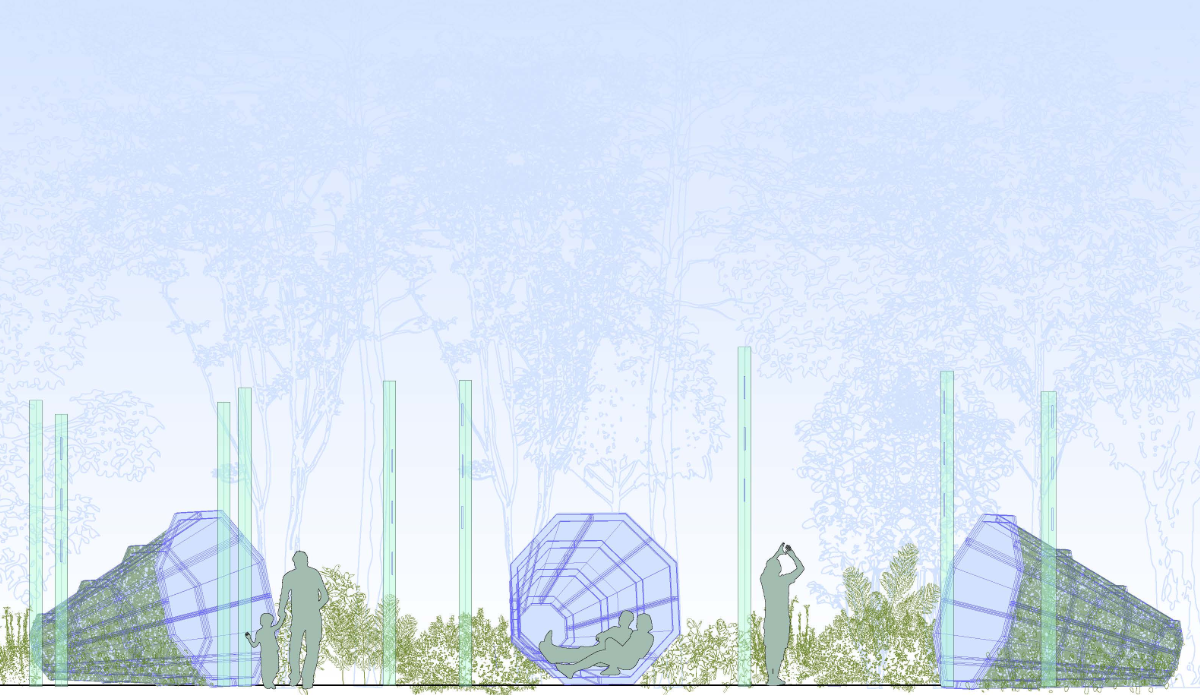
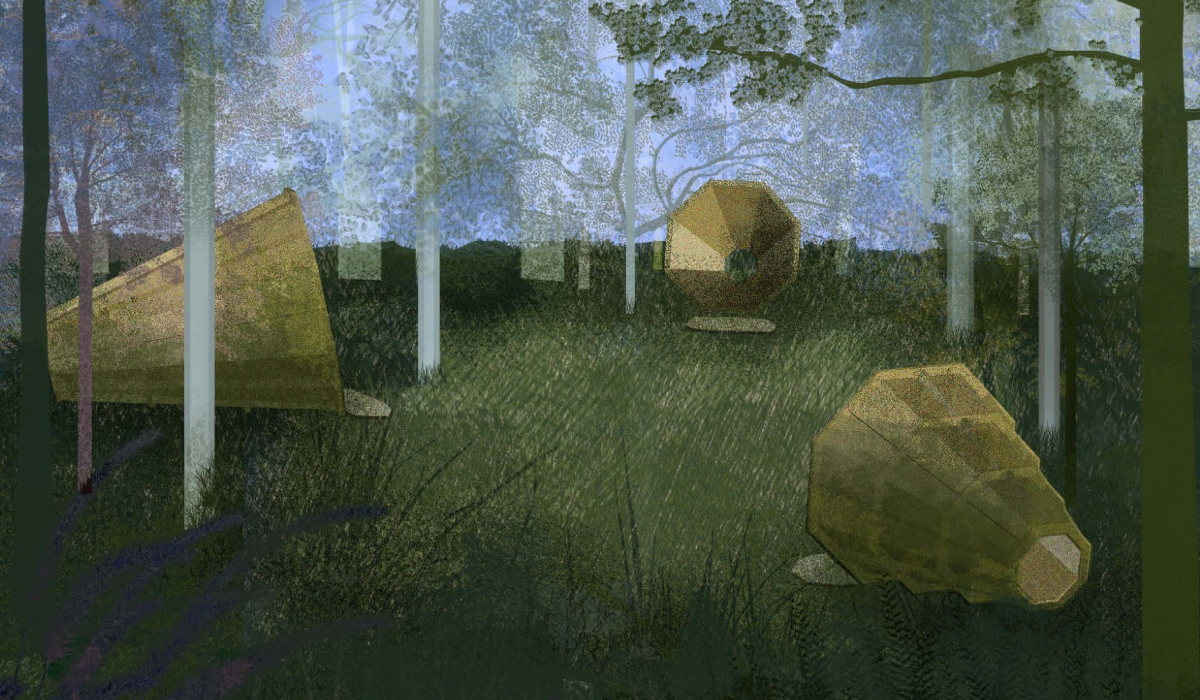
Resonant Ground introduces an ensemble of life-size megaphones and aeolian flutes to the civic bustle of the Parkway. Nestled into pocket meadows, the trio of megaphones open toward one another, harmonizing with the gentle amplification of the ambient space and offering deep listening, congregation, contemplation, conversation, storytelling, music-making and curiosity. The aeolian flutes likewise resonate in the space and voice the presence of breeze and wind; welcoming nature’s respite amid the busyness of downtown Philadelphia.
The megaphones are constructed of reclaimed and sustainably harvested North American Bald Cypress. The aeolian flutes are constructed of salvaged galvanized downspouts that are anchored in the ground. The pocket meadows will incorporate native perennial plugs and grasses into the existing turf grass, which will be left unmowed through the course of the installation to showcase the possibility of managed landscapes returning to a natural state. Changing our culture from an adversarial relationship with nature to a collaborative one restores beneficial insects to cities via biodiverse forage and shelter that can become thriving, self-sustaining public spaces for all inhabitants.
Proposal 3: Franklin Thread
by Jeff Richards
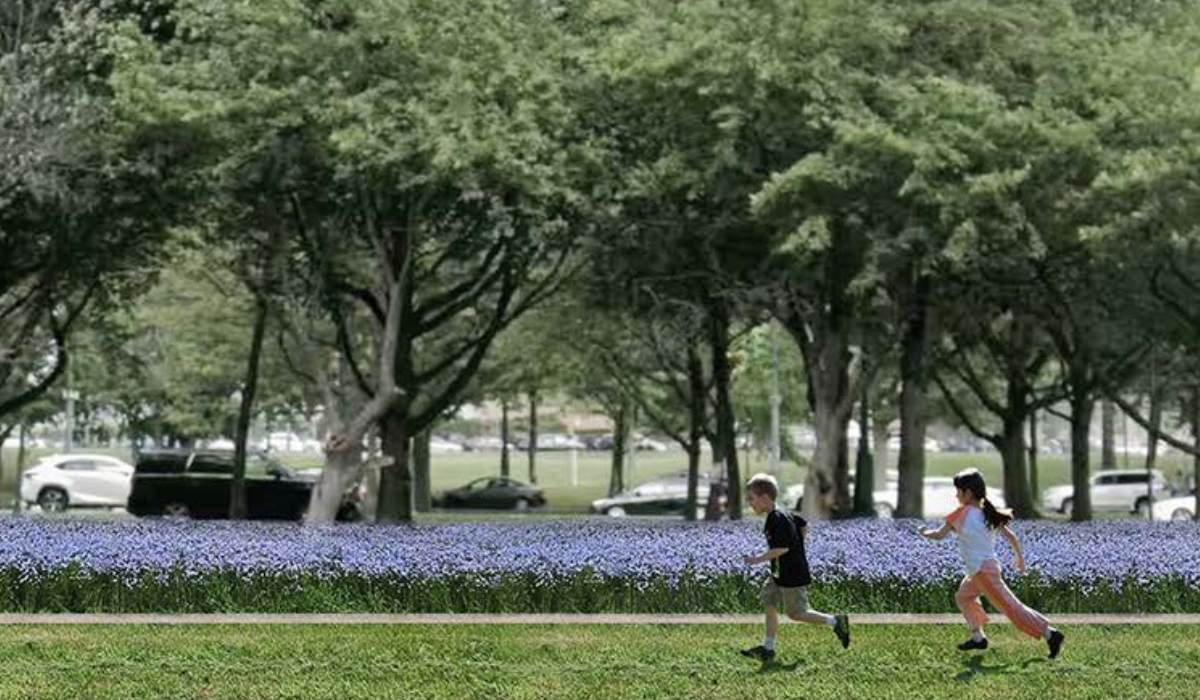
The growth of flax can be understood as a catalyst in many ways: its fiber can be used to manufacture textiles, as it was in Philadelphia pre-war; its seeds are food, offering digestive, metabolic, and cardiovascular benefits; it can remediate the toxins and pollutants of brownfield sites; it supports pollinators during its growth, attracting bees, butterflies, moths, and hummingbirds; and, as has been demonstrated, it offers a new way of thinking about building in this masonry-centric city.
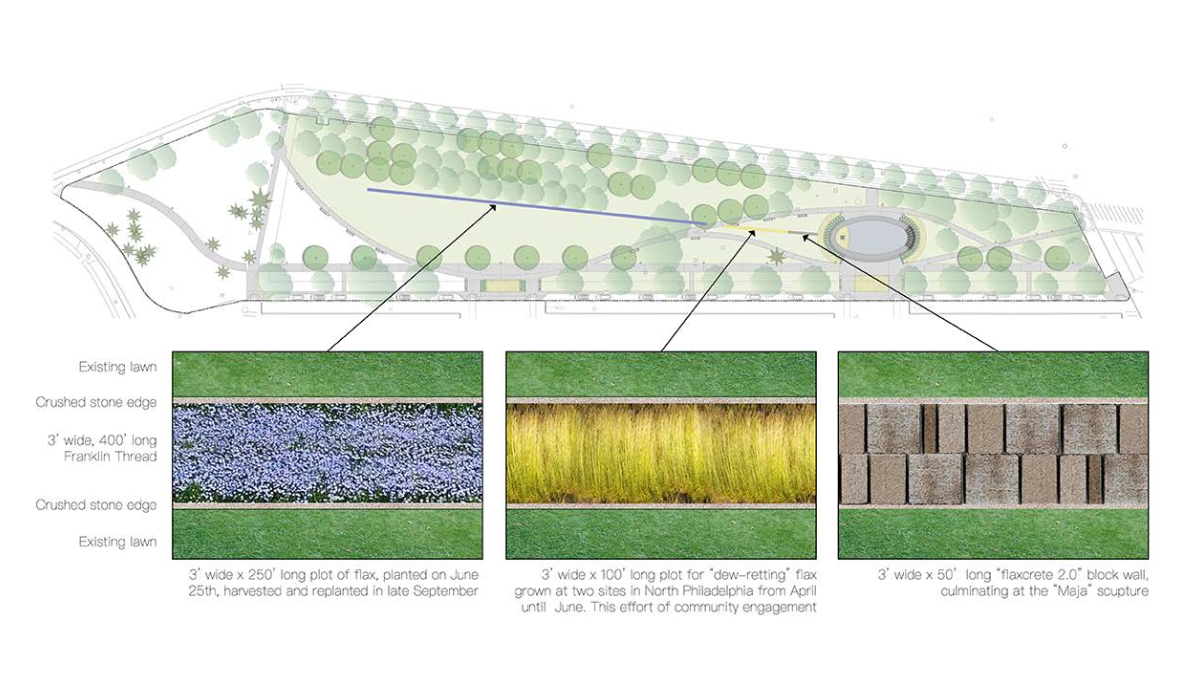
The proposed installation is a linear thread paralleling Benjamin Franklin Parkway through the center of Maja Park to receive full southern light. Its western end will be a 3’ wide, 250’ long plot of flax, planted in mid-May and harvested and replanted in mid-August. The next 100’ of the thread will be devoted to the “dew retting” of flax, the process by which the plant’s fibers are separated from its woody core. This flax will have been grown and harvested from brownfield sites in North Philadelphia through compensated, community collaboration with the New Kensington Community Development Corporation between April and June. The final 50’ of the thread, culminating at “Maja”, will be a zone occupied by a sculptural wall made from “flaxcrete”— a biogenic building material made up of flax shive in combination with a mineral binder and reinforced with flax fiber.
Proposal 4: Many Philadelphias
by Kristin Neville Taylor and Saumon Oboudiyat
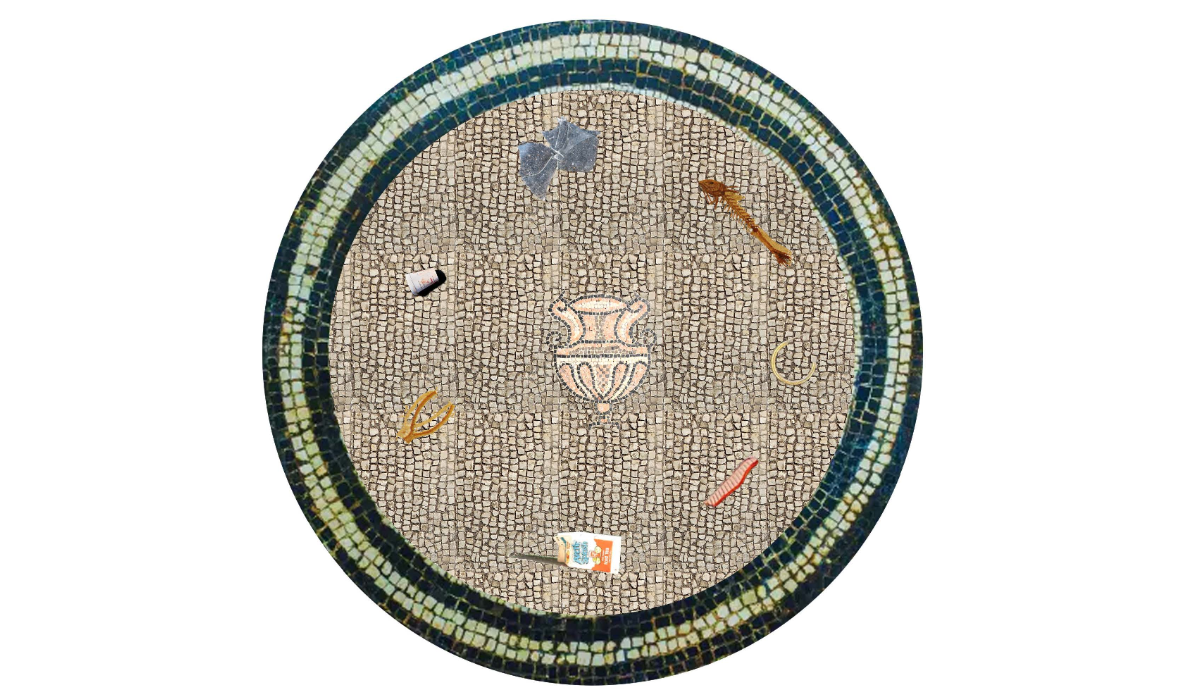
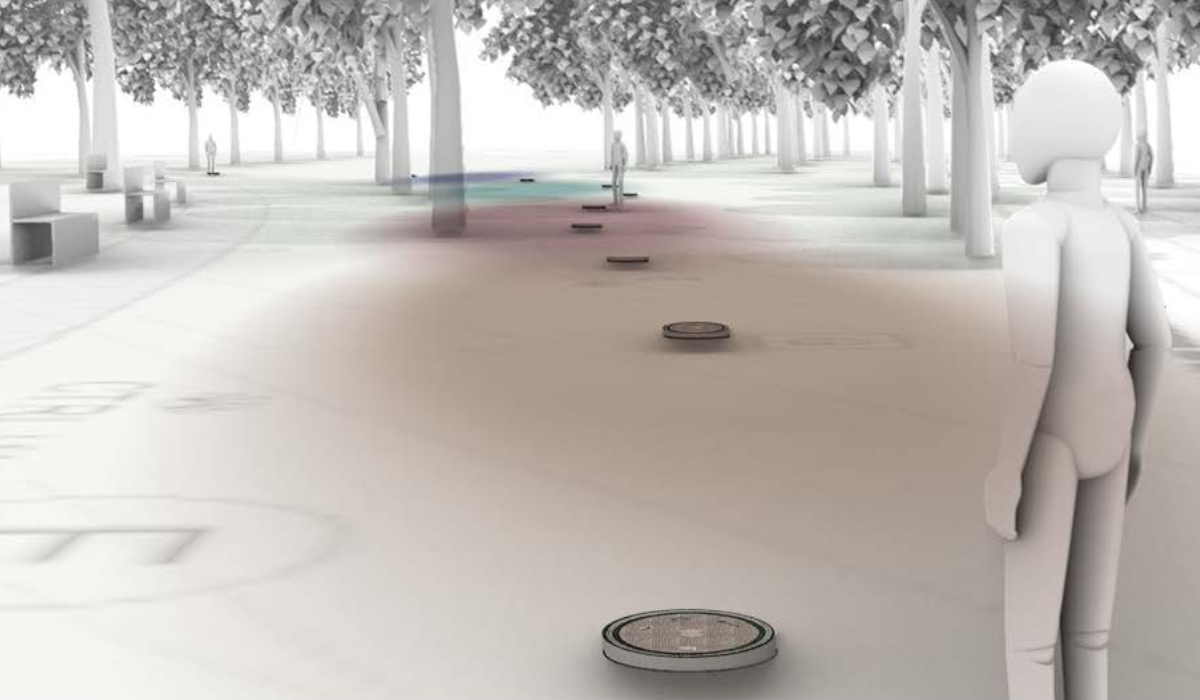
Using sound and mosaic sculpture, this artwork will celebrate the origin stories of Philadelphians to highlight the myriad voices that make up Philadelphia through their treasured and forsaken objects. William Penn chose the Greek words phileo (love) and adelphos (brother) to evoke the religious tolerance that he sought for the area. This work, ‘Many Philadelphias’, suggests a renewed vision of tolerance by highlighting the stories of ten Philadelphians, ranging from Iranian immigrants to African American elders through the objects they cherish, remember, or have lost that speak to their unique connection to our home city. The artists are equally inspired by this moment when we as a society are overwhelmed with objects to the point that they are no longer special, void of ritual and ceremony. They find inspiration in the motif of ancient Greco-Roman floor mosaics known as asàrotos òikos, or “unswept room” in Greek. These mosaics typically represented the aftermath of a party – lobster shells, empty nuts, grape vines, and chicken bones, for example. The artists propose creating ten 18” diameter mosaic stepping stones over a span of 300 feet of park area featuring depictions of cherished artifacts of Philadelphians amongst mundane objects that one might experience on a walk in the city. They invite visitors to rediscover their value in the way a child might. Further, each stepping stone will be assigned a unique sound work including excerpts of interviews layered with found-sound recordings and musical accompaniment, activated via QR code on a mobile device. The mosaic pathway and soundwalk highlights three urgent concerns of our present moment: amplifying diverse voices, fostering empathy across difference, and confronting our shared environmental precarity.
ELIGIBILITY
- Applications will be accepted from individuals, collectives, or teams including artists and other creatives twenty-one years and older.
- Applicants must live or work in the Greater Philadelphia area. This area encompasses 11 counties across four states, including Bucks, Chester, Delaware, Montgomery, and Philadelphia in Pennsylvania; Burlington, Camden, Gloucester, and Salem in New Jersey; New Castle in Delaware; and Cecil in Maryland.
- Students of any age enrolled in a degree program at a college or university are not eligible to apply.
- While no specific professional credential is required, applicants must demonstrate their qualifications and ability to execute a public project of this scale in an outdoor environment.
BUDGET
The selected proposal recipient will receive an all-inclusive award of $20,000 to realize the proposed project. All direct project expenses are to be part of this award, including but not limited to artist/design/professional fees, travel/meetings, materials and supplies, labor, equipment, fabrication, maintenance, delivery to and from the site, installation, and deinstallation. All additional overhead costs are excluded.
PLEASE NOTE: The project award may be considered taxable income based on the recipient’s tax status. It is up to applicants to consider tax implications and consult with their tax advisors. Applicants must have or purchase general liability insurance for permitting and installation. New insurance costs to satisfy these requirements will be reimbursed by aPA not to exceed $1,000. Fine art insurance for the artwork will not be provided.
SUBMISSION REQUIREMENTS AND PROCESS
The Art on the Parkway open call is a competitive, two-part selection process. A jury of artists, designers, and art professionals will select three finalist proposals from entrants for further development and public feedback. A single project will then be selected for commission at Maja Park.
Selection Criteria
- Artistic Excellence: design ability and skill, integrity, and originality of ideas
- Relationship of proposal to the theme and prompt: Art as Catalyst.
- Ability to realize projects of similar scope & technical feasibility of proposal
ROUND 1 APPLICANTS
Proposals must include the following components, and must be formatted as instructed below and submitted via Jotform no later than 11:59 p.m. ET on March 6, 2026. Please note that incomplete applications WILL NOT be reviewed. The application links can be accessed here:
APPLY
1. APPLICANT INFORMATION
Applicants will share their contact information and a project title. If you are applying as a team, please include the names and emails for each team member and identify one team member as the Lead Contact.
2. PROJECT PROPOSAL AND PROJECT BUDGET
Applicants must submit a project proposal of up to 300 words that clearly describes the project, materials, and approximate dimensions. The proposal should also explain how the work responds to the prompt Art as Catalyst. Applicants must also submit three (3) conceptual project proposal design sketches or renderings as digital images. Each digital image should be 1200 pixels at its longest dimension and saved at 72 dpi as a PDF and then combined as a single PDF document, not to exceed 10 megabytes and submitted. The design sketches should also include descriptive text for each image in the PDF document: artist name, artwork title, date, dimensions, and proposed medium. Proposals must also include a short project budget that demonstrates feasibility and include a breakdown of project expenses within the $20,000 project budget.
3. RÉSUMÉ/CV
The résumé /CV should include information about your education; professional experience; exhibition history; awards, grants, and residencies; experience in realizing artwork in the public realm; and other relevant information. Successful applicants should be able to demonstrate their ability to realize their project proposal based on prior experiences. If you are applying as a team, a résumé/CV must be submitted for each applicant.
If selected as a finalist, you will be asked to provide a letter of recommendation from a reference who is familiar with your work. If you are submitting as part of a team and your team is selected as a finalist, each team member will also be required to submit a letter of recommendation.
4. ADDITIONAL IMAGES AND DESCRIPTIONS
Submit up to six (6) digital images of recent work. Each digital image should be 1200 pixels at its longest dimension and saved at 72 dpi as a PDF and then combined as a single PDF document not to exceed 10 megabytes and submitted. These images are in addition to the images submitted as part of the project proposal. Recent works may be realized or proposed projects in any medium. Please include descriptive text for each image in the PDF document: artist name, artwork title, date, dimensions, medium, location, and a photo credit.
SUBMISSION DEADLINE
11:59 p.m. ET on Friday, March 6, 2026
FINALISTS AND PROJECT AWARD
Three finalists will be invited in early April to prepare materials and then discuss the viability of their proposals with jurors, aPA, and the Parkway Council. Finalists may be asked to prepare additional information, visuals, and budget revisions for final review by the jury and selection team. Finalists will receive an honorarium of $250 each. Finalist proposals will also be presented online on the Association for Public Art’s website for public commentary.
Finalists will be asked to meet with the jury and selection team to discuss their proposals in more detail the week of April 27-May 1st. The project commission is anticipated to be awarded by mid-May. The selected finalist will have roughly seven weeks to fabricate or construct the installation. The completed project is scheduled to open to the public on the week of June 22, 2026 (exact Opening Reception date TBD). The selected finalist will be required to sign an agreement to the terms of the project as outlined before any work on the site can commence. Terms of the project will include review by a licensed engineer, if determined necessary by aPA and PPR, at the aPA’s expense. A payment of $15,000 will be made upon execution of the agreement; the remaining $5,000 upon completion and public opening of the project.
MAJA PARK
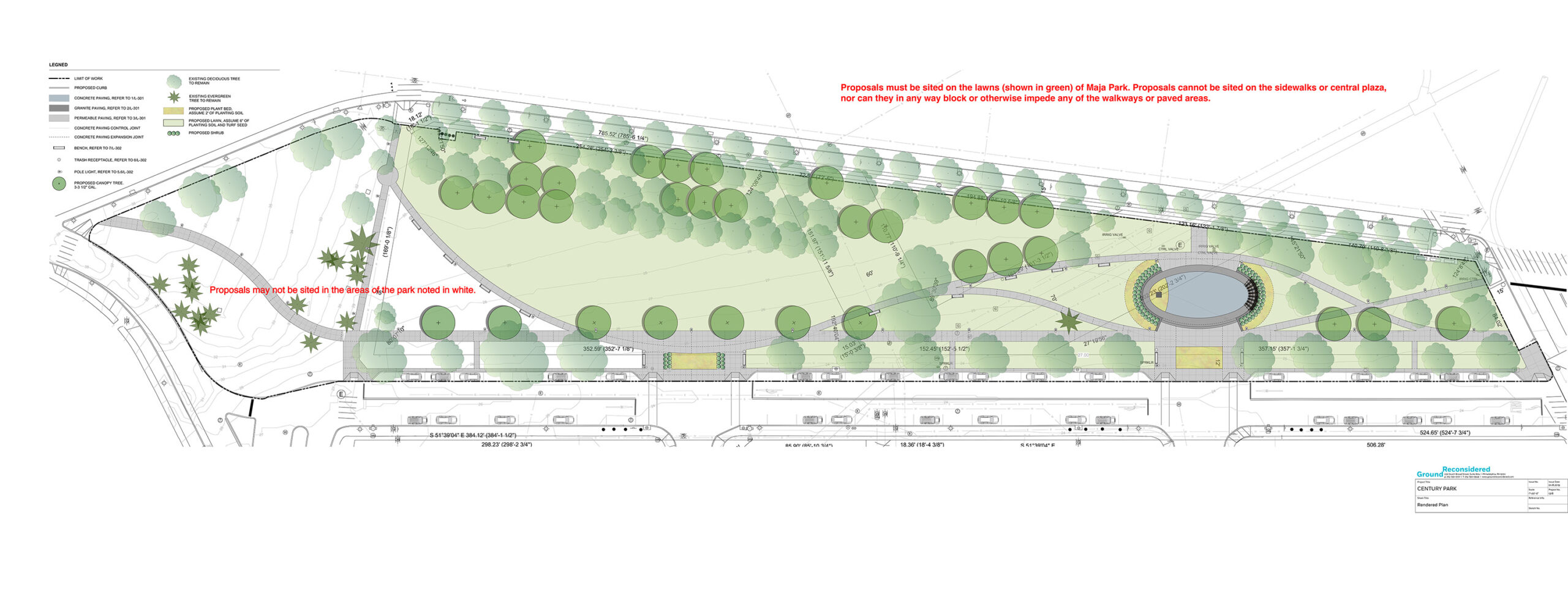
Applicants are strongly encouraged to develop proposals in response to the project location and take into consideration the site’s urban outdoor environment, as outlined in the site plan. Maja Park includes an existing sculpture (Maja by Gerhard Marcks) as well as a pergola and seating structure.
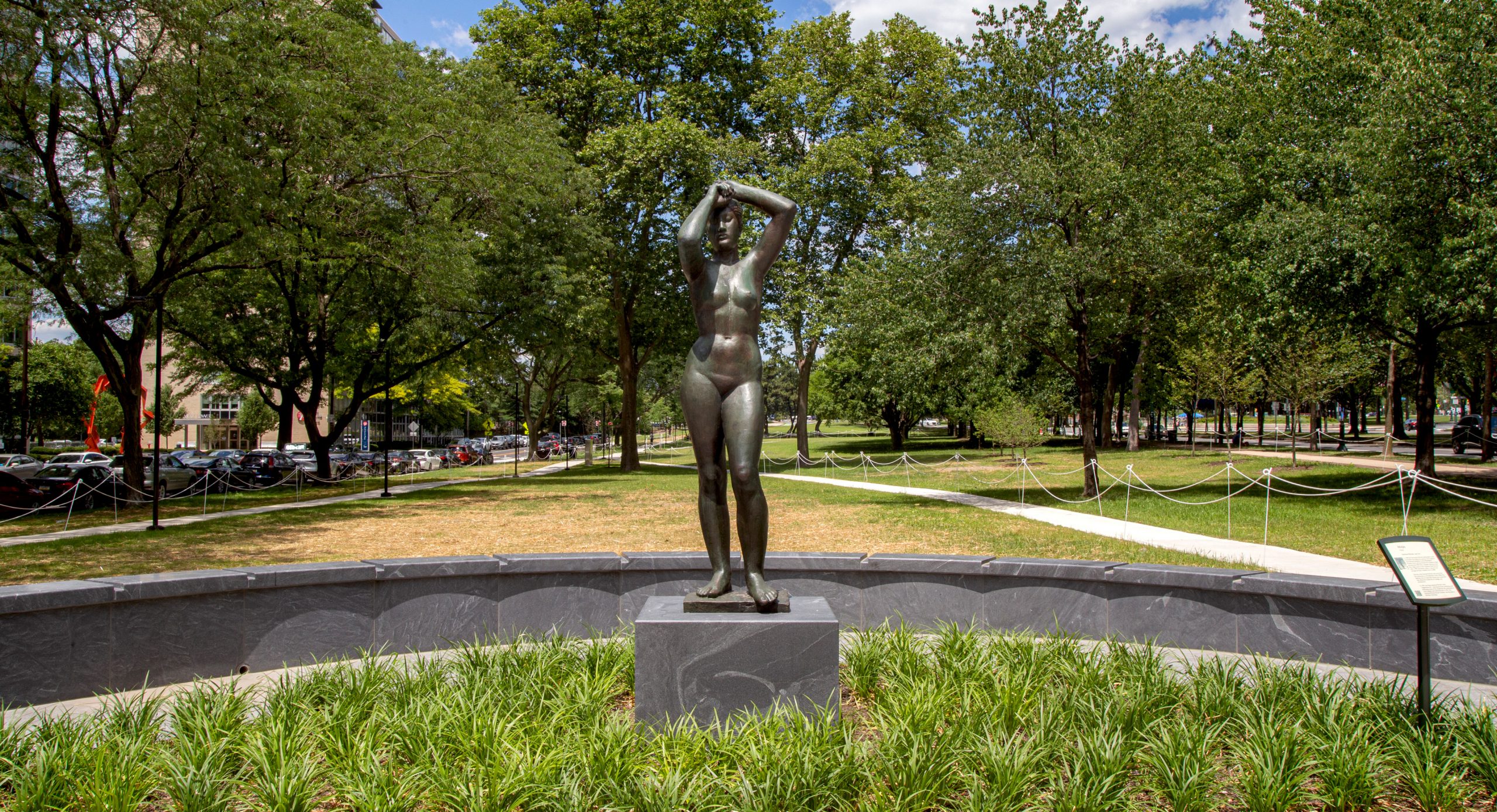
Maja by Gerhard Marcks (1942), the centerpiece of Maja Park at 22nd Street and the Benjamin Franklin Parkway (Philadelphia, PA). Photo: Meredith Edlow for aPA.
Pre-application visits to the Parkway and Maja Park are recommended to learn more about its spaces, public art, and future plans. Please be aware that the selected proposal and placement on the site are subject to final approval by the aPA, Parkway Council, and Philadelphia Parks & Recreation, and must meet all safety and technical requirements for withstanding the effects of weather and public use.
Please review the Maja Park Site Plan before submitting your application.
Learn more about the sculpture Maja.
THE PARKWAY’S FUTURE
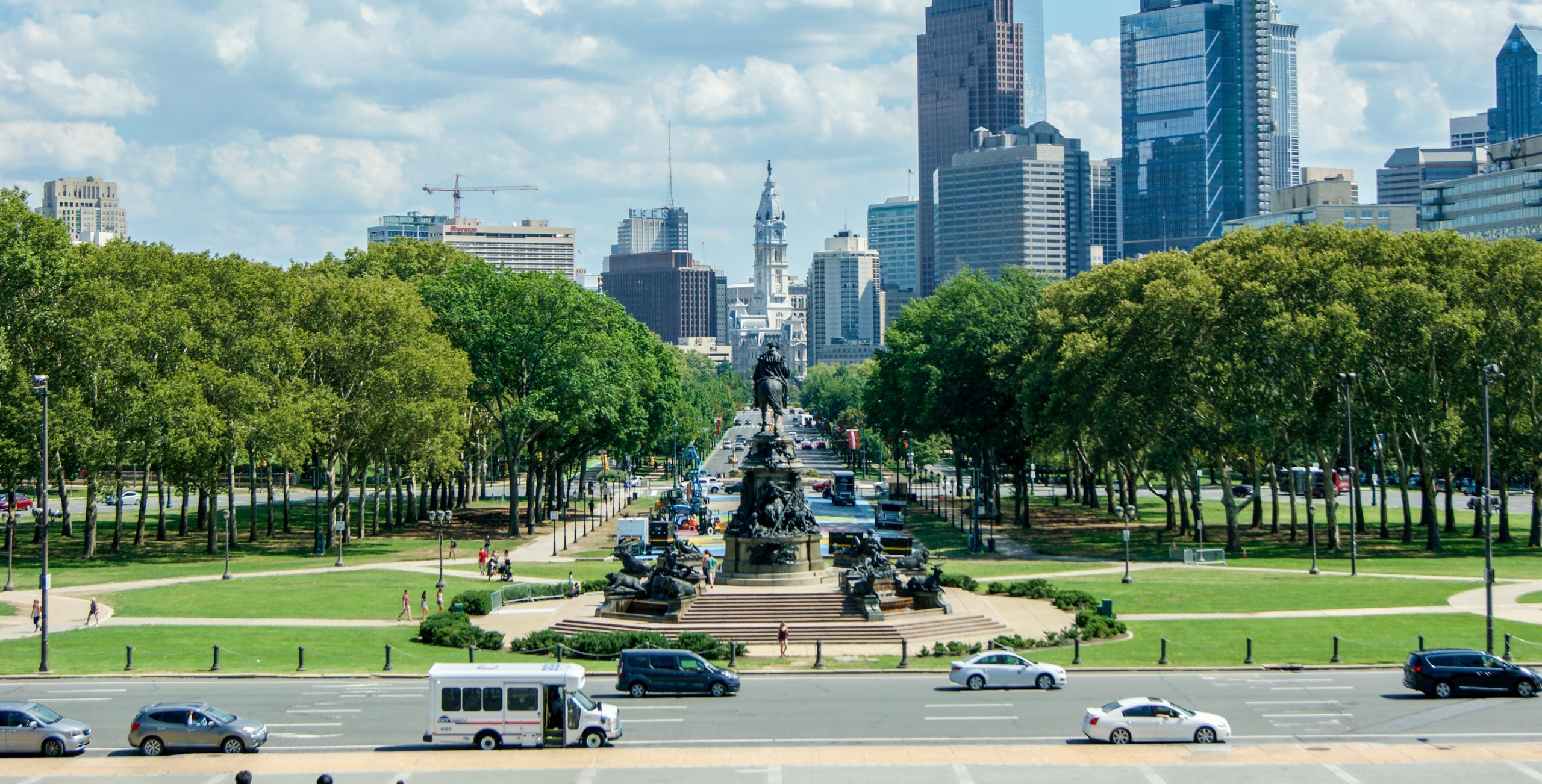
Philadelphia Parks & Recreation, the Office of Transportation, Infrastructure, and Sustainability, and the Parkway Council are working to create a multi-phase plan to transform the Parkway into Philadelphia’s greatest public space. A planning team led by Design Workshop was selected in 2021, through a public request for proposal (RFP) to generate ideas from designers and planners from around the world.
This project seeks to unlock the Parkway’s potential as a great urban park in the center of one of America’s greatest cities.
To learn more about this Parkway Council project visit phlparkway.com.
Click here to learn more about the Benjamin Franklin Parkway’s history.
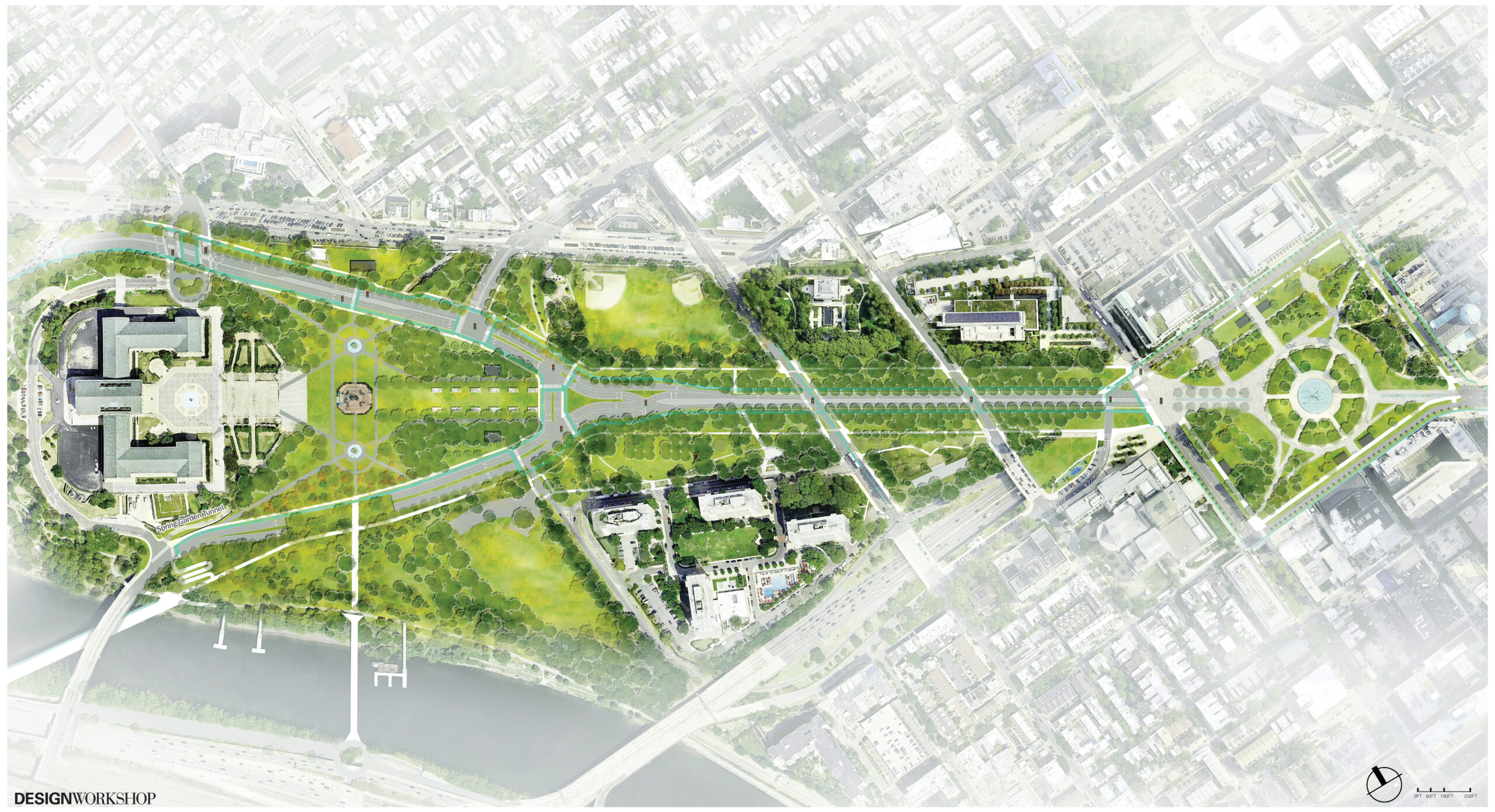 Reimagine Benjamin Franklin Parkway strategy plan. Design Workshop.
Art on the Parkway: Frequently Asked Questions
This page will continue to be updated throughout the open application period. Please check back periodically for updated information.
APPLICATION
I need help creating a PDF. Do you provide any resources?
For information on how to create a PDF please visit: https://www.wikihow.com/Create-PDF-Files
Can you provide an example of the PDF document of combined images formatted for submission?
See an example using images from 2024’s commissioned artwork by Rachel Hsu.
Are there restrictions on the size of files submitted?
Yes. Combined PDF image files should not exceed 10 megabytes. To ensure that your image files do not exceed 10 megabytes see this guide. It may be necessary for you to “reduce or compress” your PDF documents before submitting them.
PROPOSAL
What theme or prompt should my proposal address?
Successful 2026 proposals should explore the idea of Art as Catalyst. More specifically, we are looking for public artworks that contribute to a place for people with different backgrounds and perspectives to engage, encounter new ideas, and increase mutual understanding. Creative works that inspire, motivate, or energize are encouraged as are artworks that embrace experimentation, challenge norms, or inspire action.
Does my proposal need to serve any functional purpose?
Any type of temporary installation may be proposed. Proposals may be purely formal explorations of space or materials or exhibit some functional use (such as seating or shade).
How closely must my proposal respond to the site or the Parkway?
Successful proposals will engage both Maja Park and the Parkway; however, applicants are invited to consider such engagement widely and creatively. Proposals shall be appropriate in scale, material, and content for the site..
Will maintenance be provided?
The award recipient is responsible for any ongoing maintenance and upkeep of the artwork while it is installed at the site.
Will the installation be outdoors in all weather?
The installation must be able to withstand being outside through the summer and early fall (four months). Proposals must be able to withstand rain, wind, direct sun, varying temperatures and humidity, and other environmental conditions.
Are there material restrictions for the installation?
Other than functionality, durability, budgeting, and safety, there are no material restrictions. However, the project must be self-contained and not require constant monitoring or electrical power. We encourage the use of sustainable/recyclable materials
How safe must the installation be?
Installations must be able to withstand the wear and tear of weather exposure and heavy public interaction. The aPA will work closely with the winning applicant to make any necessary structural modifications, suggestions, or additions.
For safety reasons, we will not select any proposal that enables the public to climb to unsafe heights, access hidden or enclosed spaces, touch materials that could be unsafe in direct sunlight, or encounter sharp or otherwise hazardous edges or protrusions. The selection team will require design or engineering modifications to any project or questionable design feature that poses a potential hazard to the general public or the site. And, the commissioned project may include review by a licensed engineer at aPA’s expense to ensure that durability and safety standards are met.
Will I be able to dig into the ground, create a foundation, or otherwise secure my installation?
Installations are temporary and no permanent foundation or lasting changes to the park can be made. The site must be restored to its original condition.
Can I attach my installation or artwork to the trees or light posts or use the trees or lightposts for rigging?
It is not permitted for the artwork to attach to trees or light posts in any manner.
Can my proposal be sited on any of the sidewalks or the central plaza?
No, proposals may only be sited on the lawns noted on the Maja Park site plan. Proposals may not block or otherwise impede any of the walkways or paved areas.
I would like to engage the Maja sculpture directly, is that permitted?
It is not permitted for the work to attach to or touch the Maja sculpture in any manner. However, proposals may engage with the sculpture thematically or through site placement.
Will there be lighting at night?
There will not be any dedicated lighting for the project. Ambient park and plaza lighting exists at the site.
Will there be any security?
No, there will not be any ongoing security or monitoring of the site or installation during the period it is on view.
ELIGIBILITY
Can collaborative teams apply?
Yes, teams may apply. Please note that regardless of the number of team members, there is only a single project award of $20,000.
Are there any age limitations for applicants?
Applicants must be at least 21 years of age or older in order to apply.
Are students eligible to apply?
No. This opportunity is limited to artists who are not enrolled in a program of study during the time of the application, and therefore current students who are graduating after the submission deadline of March 6th would not be eligible to apply.
I consider myself creative, but do not have an educational or professional background in a creative field. Am I eligible?
Yes, there are no specific requirements for educational or professional credentialization; however, applicants must demonstrate their ability to execute a public project of this scale in an outdoor environment.
Can non-Philadelphia residents apply? Can non-US citizens apply?
The competition is open to entrants who live or work in the Greater Philadelphia area. This area encompasses 11 counties across four states, including Bucks, Chester, Delaware, Montgomery, and Philadelphia in Pennsylvania; Burlington, Camden, Gloucester, and Salem in New Jersey; New Castle in Delaware; and Cecil in Maryland.
To receive the project commission and award, an applicant must have a US tax ID number or Social Security number. Award recipients will be responsible for their project-related tax obligations.
I live in the Greater Philadelphia area, but my artistic partner lives outside the region, are we eligible to apply?
Yes, if you are applying as a team, as long as one team member lives or works in the Greater Philadelphia area, you are eligible; however, preference is for the majority of team applicants to live or work in the Greater Philadelphia area.
Are travel funds provided to team members or consultants from outside of the Philadelphia area? Or, are shipping costs paid for?
There are no funds available for travel or accommodations or for shipping or delivery. Any travel or transportation needs should be included in your $20,000 project budget.
Can I submit more than one proposal?
No. Individuals may only submit one proposal, either alone or as part of a team.
FUNDING AND PRODUCTION
Is there additional funding?
No additional funding will be provided.
I have other funding sources, can I use these to support my project?
Only the $20,000 award that aPA provides to the selected applicant or team may be used to cover the direct costs of producing the project. Outside grant funding or personal funds may be used only for indirect project costs (e.g., travel or studio space) and may not be applied to the direct creation or fabrication of the artwork.
Must I account for in-kind support in my budget? For example, access to a free source of materials or access to fabrication facilities through my workplace?
You are free to use in-kind support and this need not be accounted for within the $20,000 project budget. Please add a note to your budget explaining any in-kind support.
How will payment be submitted to the finalist?
A payment of $15,000 will be made upon signing a Letter of Agreement with aPA; the remaining $5,000 upon completion and public opening of the project.
Do I need insurance?
The recipient of the commission must have or purchase general liability insurance for permitting and installation. aPA will work with the commissioned artist on the exact insurance coverages that are needed. New insurance costs to satisfy these requirements will be reimbursed by aPA not to exceed $1,000. Fine art insurance for the artwork will not be provided.
How many hours should the commissioned project take to install?
It entirely depends on the scope of your project and its complexity.
How long can I work on-site to create the installation?
Projects may be prefabricated off site or constructed on site. The installation schedule must be mutually agreed upon by all parties, but must occur during normal park hours of operation.
How many people can I have working on the site?
As many as are reasonable and appropriate given the conditions of the site, or as otherwise approved by aPA.
May I propose an installation created through public participation?
Yes, you may engage the public in any participatory design and creation of the artwork. All proposals will be reviewed to ensure public safety, and all participants installing the work on site must be over 21.
Is there parking near the site?
There is timed street parking on Park Towne Place road, located between 24th and 22nd Streets, bordering Maja Park and Park Towne Place Apartments. There is also metered parking on the Parkway inbound, outer lane in front of Maja Park.
Can I have materials delivered to the site?
Yes, however, deliveries to the site will need to be coordinated with aPA, and the artist must be present on site to accept deliveries.
Can I alter my proposal once commissioned to realize the project ?
The recipient of the commission will work closely with aPA and, if necessary, a licensed engineer, to understand the demands of the commissioned proposal and discuss possible issues with construction, materials, schedules, and siting that may affect the final design.
How long will the project be on view?
The installation will be on view for roughly four months. We encourage the commissioned individual or team to find opportunities for their project to find new homes or to be repurposed, or for project materials to be recycled or reused.
Who owns the rights to the commissioned design?
Copyrights are retained by those who create the design proposals. The aPA, Parkway Council, and Philadelphia Parks & Recreation (PPR) reserve the right to reproduce the finalist’s images of the design and installation for their own uses.
Will the project receive any publicity?
Yes, aPA, Parkway Council, and PPR will publicize the installation and seek media coverage
Will any public programming take place during the time the project is on view?
We will host an opening event as well as a talk with the commissioned artist or team. Additional programming may be offered.